

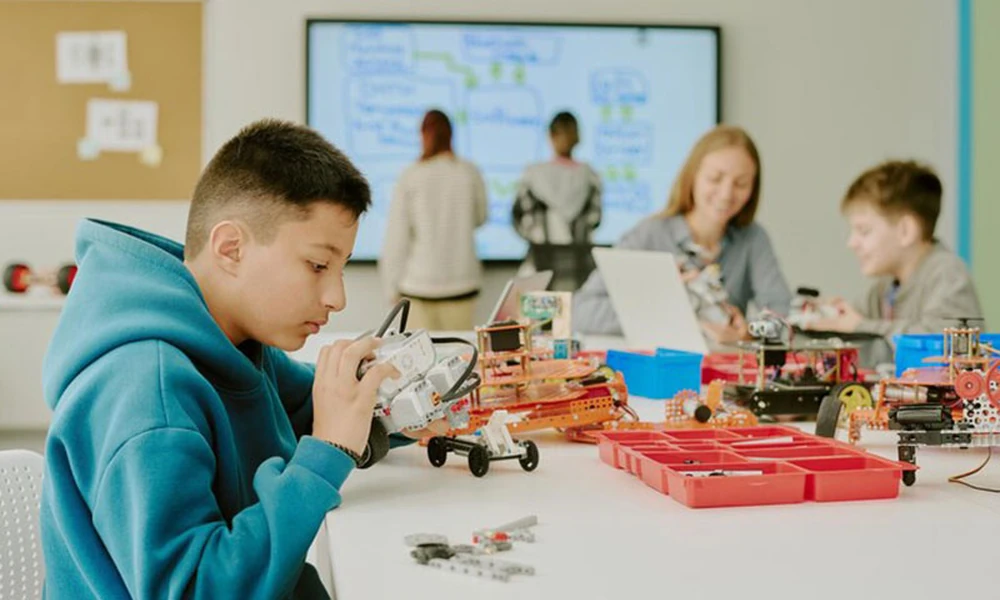
Traditional classrooms often rely heavily on textbooks. Children memorize facts from shiny paper pages. But modern education requires a different approach. Young minds need to explore the world actively. Science and technology offer great learning pathways. Engineering and mathematics spark early curiosity. These subjects build strong foundational skills together. Early exposure shapes how children solve problems. Active engagement turns passive listeners into thinkers. STEM classroom activities for grades K-5 change everything completely. Students do not just read about concepts. They experience the ideas through physical projects. This shifts the focus from memorization to discovery.
Sparking Early Curiosity
Young children possess a natural desire to explore. They ask questions about everything around them. Textbook lessons sometimes suppress this beautiful curiosity. STEM activities encourage students to look closer. Children investigate how things work in reality. Mission.io creates tools that support this journey. Students touch materials and observe unique reactions. They begin to notice patterns in nature. This hands-on process makes learning feel alive. Now, everyday objects become tools for scientific discovery. Curiosity drives the entire educational experience forward. Students want to find the answers themselves.
Building Problem Solving Skills
Real world challenges require creative and flexible thinking. Textbooks provide fixed answers to every question. STEM education presents open-ended problems instead. Students must design their own unique solutions. Sometimes, their first attempts fail completely. This failure teaches resilience to young learners. They analyze the results and try again. Mission.io helps teachers guide this crucial process. Children learn to view mistakes as data. They adjust their designs based on evidence.
Encouraging Collaborative Dialogue
Critical thinking thrives through active communication with others. Students do not work in isolation here. They share diverse ideas during group challenges. Children must explain their thoughts very clearly. They listen to different perspectives from peers. This interaction builds vital social skills early. Teams negotiate to find the best path. They combine their strengths to finish projects. Mission.io designs platforms that foster teamwork. Working together exposes children to new ideas.
Connecting Abstract Concepts
Abstract math concepts often confuse young minds. Numbers on paper feel completely disconnected from life. STEM learning bridges this wide gap beautifully. Students use math to build physical structures. They measure lengths and calculate total weights. Science concepts become visible through simple experiments. Children see the direct results of forces. Gravity is no longer just a word. It becomes a force they can control. This connection makes knowledge stick much longer. Students understand the purpose behind the lessons. Learning gains a deep and lasting meaning.
Nurturing Lifelong Learners
Elementary school sets the tone for future success. Early experiences shape attitudes toward learning forever. STEM activities make education deeply engaging and joyful. Students develop a passion for active discovery. They stop fearing difficult academic subjects. Instead, they welcome complex challenges with joy. Critical thinking becomes a natural daily habit.